Hardware desk · 2026
Reading mining hardware beyond the specification sheet
A practical editorial guide to compute density, thermal conditions, facility constraints and responsible documentation. This material is for education and is not financial advice.
Why context matters
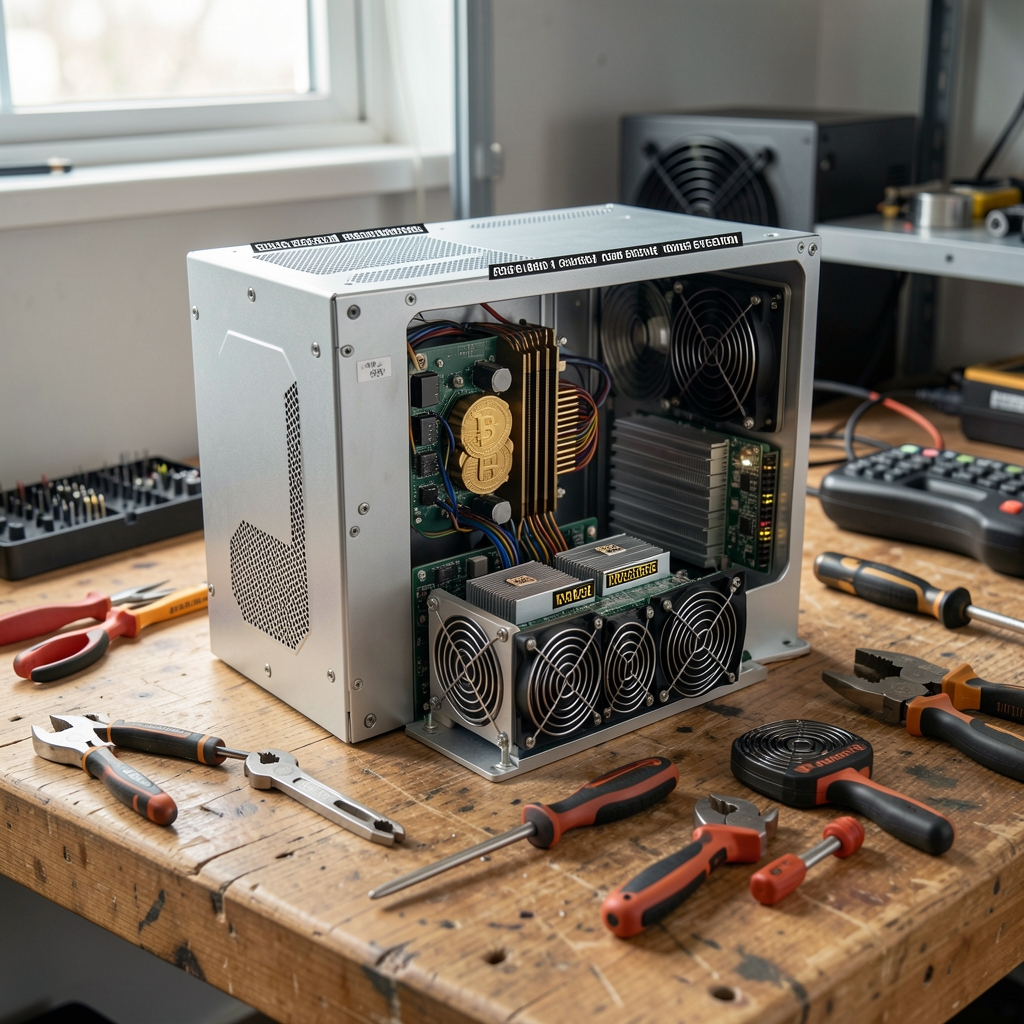
Hashrate, power draw and noise are useful starting points, but a machine never operates in isolation. Network difficulty, electricity arrangements, ambient temperature, maintenance access and replacement schedules all influence how a specification behaves in practice.
Readers should compare like with like, record the date of each source and avoid treating a manufacturer estimate as an outcome.
A comparison vocabulary
| Question | Useful evidence | Why it matters |
|---|---|---|
| What work does the unit perform? | Algorithm, hashrate definition and test conditions | Prevents comparisons across incompatible measures. |
| How does it use energy? | Power draw range, voltage and efficiency method | Shows the operating assumptions behind a number. |
| How is heat handled? | Airflow, liquid loop or immersion design | Connects performance claims to facility engineering. |
| How is service recorded? | Warranty terms, logs and spare-part access | Places maintenance into the total operating picture. |
Editorial note
A technical metric is not a promise. Readers should confirm current documentation and seek qualified professional advice for decisions involving capital, tax or compliance.